
trenching Brush Prairie WA planning should begin with the finished property, not with the first machine task. Owners often call because trees, standing water, rough ground, a failed driveway or an underground route is blocking progress. The visible issue matters, but the lasting result depends on what comes next: a home, shop, utility, septic system, landscape, access road or drainage outlet. A site-specific plan connects today’s excavation work to that long-term use.
Acre Maker provides professional trenching services for homeowners, builders and property owners across Southwest Washington. The team can evaluate the property, clarify the groundwork scope and coordinate related clearing, grading, access, trenching or excavation. Property owners can request a project estimate after gathering any plans, surveys, utility information and jurisdictional requirements available for the site.

Long trench excavation through rural property for underground infrastructure. Image source: Acre Maker website
Why trenching Brush Prairie WA Requires a Property-Specific Plan
Brush Prairie properties may have long utility runs, private wells, septic systems, shops, barns and past owner-installed lines. That combination makes investigation and documentation especially important. A clean trench is only successful when the installed system passes inspection and the restored ground remains stable.
The practical questions are consistent: What must remain protected? Where can equipment travel? Which elevations are fixed? Where will water go? What material is suitable for reuse? What inspections or approvals occur before work is covered? Answering those questions early helps a Brush Prairie, WA property move from an isolated excavation task to a coordinated, buildable result.
Mistake 1: Digging Before the Locate Process Is Complete
The first useful step is to define the outcome before moving equipment. On a Brush Prairie, WA property, visible meters and poles do not reveal every buried facility or the status of all utility responses. During the site walk, the contractor should verify the locate ticket, markings, tolerance zones and any private-line investigation. That information helps determine the equipment, access route, material handling, and order of operations needed for the work. For a trenching Brush Prairie WA project, this early evaluation is especially important because the visible problem is often connected to drainage, soil condition, buried infrastructure, or a future phase of construction.
A sound recommendation is to delay excavation until the information is complete and marks are protected. The scope should identify what will be removed or reshaped, what will remain protected, where excavated material will go, and what condition the area should be in at handoff. If the plan skips that level of detail, a strike can cause injury, outage, liability and emergency repair. Clear benchmarks also make it easier to coordinate trenching with surveyors, builders, utility providers, septic professionals, or landscape crews without repeating work.
Mistake 2: Using an Unapproved Route
A dependable plan separates what is visible on the surface from what controls performance below it. On a Brush Prairie, WA property, the shortest path may conflict with septic, foundations, future buildings or provider rules. During the site walk, the contractor should review the route with every responsible trade and compare it with the complete site plan. That information helps determine the equipment, access route, material handling, and order of operations needed for the work. For a trenching Brush Prairie WA project, this early evaluation is especially important because the visible problem is often connected to drainage, soil condition, buried infrastructure, or a future phase of construction.
A sound recommendation is to approve crossings, entries and future access before marking the trench. The scope should identify what will be removed or reshaped, what will remain protected, where excavated material will go, and what condition the area should be in at handoff. If the plan skips that level of detail, the line may need to be relocated after installation or block later development. Clear benchmarks also make it easier to coordinate trenching with surveyors, builders, utility providers, septic professionals, or landscape crews without repeating work.
Mistake 3: Assuming One Depth Fits Every Line
This decision should be made during field evaluation, not after excavation has already started. On a Brush Prairie, WA property, cover requirements vary by utility, material, surface and jurisdiction. During the site walk, the contractor should obtain current specifications and account for finished grades rather than existing ground alone. That information helps determine the equipment, access route, material handling, and order of operations needed for the work. For a trenching Brush Prairie WA project, this early evaluation is especially important because the visible problem is often connected to drainage, soil condition, buried infrastructure, or a future phase of construction.
A sound recommendation is to set grade controls and verify depth as excavation proceeds. The scope should identify what will be removed or reshaped, what will remain protected, where excavated material will go, and what condition the area should be in at handoff. If the plan skips that level of detail, later grading can reduce cover or an inspection can reject the trench. Clear benchmarks also make it easier to coordinate trenching with surveyors, builders, utility providers, septic professionals, or landscape crews without repeating work.
Mistake 4: Ignoring Groundwater and Rain
The goal is not simply to move soil or material; it is to create a site that supports the next phase. On a Brush Prairie, WA property, open trenches collect runoff and can collapse or soften at the bottom. During the site walk, the contractor should plan weather timing, temporary drainage, pumping and safe access. That information helps determine the equipment, access route, material handling, and order of operations needed for the work. For a trenching Brush Prairie WA project, this early evaluation is especially important because the visible problem is often connected to drainage, soil condition, buried infrastructure, or a future phase of construction.
A sound recommendation is to limit open length and keep water from entering the excavation where practical. The scope should identify what will be removed or reshaped, what will remain protected, where excavated material will go, and what condition the area should be in at handoff. If the plan skips that level of detail, bedding becomes contaminated and trench walls or adjacent surfaces fail. Clear benchmarks also make it easier to coordinate trenching with surveyors, builders, utility providers, septic professionals, or landscape crews without repeating work.
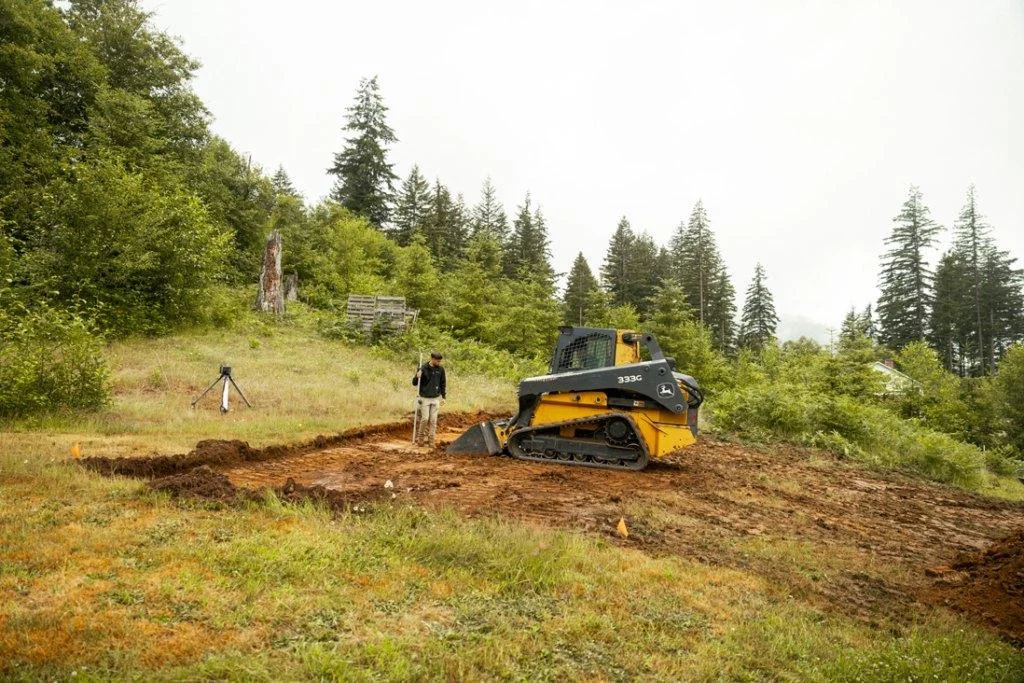
Field planning helps align trench routes with elevations and future improvements. Image source: Acre Maker website
Mistake 5: Missing the Inspection Window
Good site work is measured by how well the property functions after the equipment leaves. On a Brush Prairie, WA property, some systems must be observed, tested or photographed before cover. During the site walk, the contractor should confirm who requests inspection and what must remain visible. That information helps determine the equipment, access route, material handling, and order of operations needed for the work. For a trenching Brush Prairie WA project, this early evaluation is especially important because the visible problem is often connected to drainage, soil condition, buried infrastructure, or a future phase of construction.
A sound recommendation is to coordinate installation and inspection before excavation equipment leaves. The scope should identify what will be removed or reshaped, what will remain protected, where excavated material will go, and what condition the area should be in at handoff. If the plan skips that level of detail, the trench may have to be reopened solely to prove compliance. Clear benchmarks also make it easier to coordinate trenching with surveyors, builders, utility providers, septic professionals, or landscape crews without repeating work.
Mistake 6: Backfilling With Unsuitable Material
A practical scope connects today’s work to the driveway, building, utility, drainage, or landscape work that follows. On a Brush Prairie, WA property, large rock, organics and wet soil can damage lines and settle unevenly. During the site walk, the contractor should separate excavated materials and compare them with the required bedding and backfill specification. That information helps determine the equipment, access route, material handling, and order of operations needed for the work. For a trenching Brush Prairie WA project, this early evaluation is especially important because the visible problem is often connected to drainage, soil condition, buried infrastructure, or a future phase of construction.
A sound recommendation is to import appropriate material where native spoil is unsuitable. The scope should identify what will be removed or reshaped, what will remain protected, where excavated material will go, and what condition the area should be in at handoff. If the plan skips that level of detail, pipes can be damaged and restored surfaces can sink. Clear benchmarks also make it easier to coordinate trenching with surveyors, builders, utility providers, septic professionals, or landscape crews without repeating work.
Mistake 7: Compacting Without Protecting the Utility
The best time to solve this issue is while access, elevations, and equipment sequencing are still flexible. On a Brush Prairie, WA property, heavy equipment and aggressive lifts can shift or crush installed components. During the site walk, the contractor should follow utility-specific backfill zones and compaction methods. That information helps determine the equipment, access route, material handling, and order of operations needed for the work. For a trenching Brush Prairie WA project, this early evaluation is especially important because the visible problem is often connected to drainage, soil condition, buried infrastructure, or a future phase of construction.
A sound recommendation is to build support evenly and increase equipment effort only after adequate cover. The scope should identify what will be removed or reshaped, what will remain protected, where excavated material will go, and what condition the area should be in at handoff. If the plan skips that level of detail, alignment, slope or connections can change during restoration. Clear benchmarks also make it easier to coordinate trenching with surveyors, builders, utility providers, septic professionals, or landscape crews without repeating work.
Mistake 8: Failing to Document the Route
A written field plan gives the owner and contractor the same definition of a finished result. On a Brush Prairie, WA property, a completed trench becomes invisible immediately after backfill. During the site walk, the contractor should record photographs, measurements, crossings and spare conduits. That information helps determine the equipment, access route, material handling, and order of operations needed for the work. For a trenching Brush Prairie WA project, this early evaluation is especially important because the visible problem is often connected to drainage, soil condition, buried infrastructure, or a future phase of construction.
A sound recommendation is to store as-builts with property records and share them with future contractors. The scope should identify what will be removed or reshaped, what will remain protected, where excavated material will go, and what condition the area should be in at handoff. If the plan skips that level of detail, future work repeats locating uncertainty and risks damaging the installation. Clear benchmarks also make it easier to coordinate trenching with surveyors, builders, utility providers, septic professionals, or landscape crews without repeating work.
How Acre Maker Approaches Trenching Projects
Acre Maker can coordinate the excavation portion of trenching with route layout, site access, spoil management, bedding support, backfill and restoration. Utility design, materials, installation, testing and inspection remain coordinated with the responsible provider or trade.
The safest workflow confirms locates, private facilities, specifications, crossings and inspection timing before the trench is opened. Keeping accurate records before backfill protects the owner during future improvements.
Learn more about Acre Maker’s start-to-finish groundwork services and the company’s commitment to local communication and dependable field work on the About Acre Maker page.
What a Complete Contractor Proposal Should Address
A useful proposal for trenching Brush Prairie WA should define limits, quantities, exclusions and the condition of the finished site. Look for descriptions of mobilization, access, protection, clearing or excavation limits, soil and material handling, import or export, drainage, compaction, cleanup and restoration. The proposal should identify owner-provided information, permit responsibility, utility locating, inspections, schedule assumptions and conditions that could trigger a documented change. Comparing that scope is more reliable than comparing a single price with no shared definition of completion.
Ask how weather, unsuitable soil, buried debris, rock, groundwater, unmarked private utilities or design changes will be handled. A contractor cannot eliminate every unknown below the surface, but the agreement can establish communication, documentation and decision-making procedures before those unknowns affect the work.
A Practical trenching Brush Prairie WA Planning Checklist
- Complete 811 and private utility investigation.
- Approve the route against the full site plan.
- Confirm depth from finished grade.
- Plan wet-weather and trench-water controls.
- Assign inspection and testing responsibility.
- Separate suitable and unsuitable spoil.
- Follow bedding and staged compaction requirements.
- Create a durable as-built record.
Frequently Asked Questions
How long must I wait after contacting 811?
Follow the current Washington locate requirements and confirm all facility responses before digging; the required timing can change, so use the official guidance.
Can wet soil be used for backfill?
Only when it can meet the project requirements. Saturated or unsuitable material often cannot be placed and compacted reliably.
Why does finished grade matter to trench depth?
Future grading may remove soil or add cover. Depth should be evaluated relative to the final planned surface.
Do all trenches require inspection?
Requirements vary by utility and jurisdiction. Confirm before excavation so the trench remains open for any required review.
Can Acre Maker handle trench backfill and restoration?
Yes, the scope can include excavation, spoil management, bedding support, backfill and surface restoration when coordinated with the utility installer and specifications.
Plan Your Brush Prairie, WA Groundwork With Acre Maker
Successful trenching Brush Prairie WA work creates more than a temporary visual improvement. It should make the property safer, easier to build on, better drained and ready for the next trade or long-term use. Acre Maker helps Southwest Washington property owners connect field conditions with a clear scope for trenching. To discuss the property, intended use and next steps, contact Acre Maker for a project estimate.
External Sources
- Washington Utilities and Transportation Commission – Dig Law
- Dig Safe Washington – Homeowner Information
- Clark County – Standard Details
Image Credits
- trenching Brush Prairie WA long utility excavation – Acre Maker website
- Brush Prairie trenching route layout and field planning – Acre Maker website