
drainage excavation Camas WA planning should begin with the finished property, not with the first machine task. Owners often call because trees, standing water, rough ground, a failed driveway or an underground route is blocking progress. The visible issue matters, but the lasting result depends on what comes next: a home, shop, utility, septic system, landscape, access road or drainage outlet. A site-specific plan connects today’s excavation work to that long-term use.
Acre Maker provides professional septic & drainage excavation services for homeowners, builders and property owners across Southwest Washington. The team can evaluate the property, clarify the groundwork scope and coordinate related clearing, grading, access, trenching or excavation. Property owners can request a project estimate after gathering any plans, surveys, utility information and jurisdictional requirements available for the site.
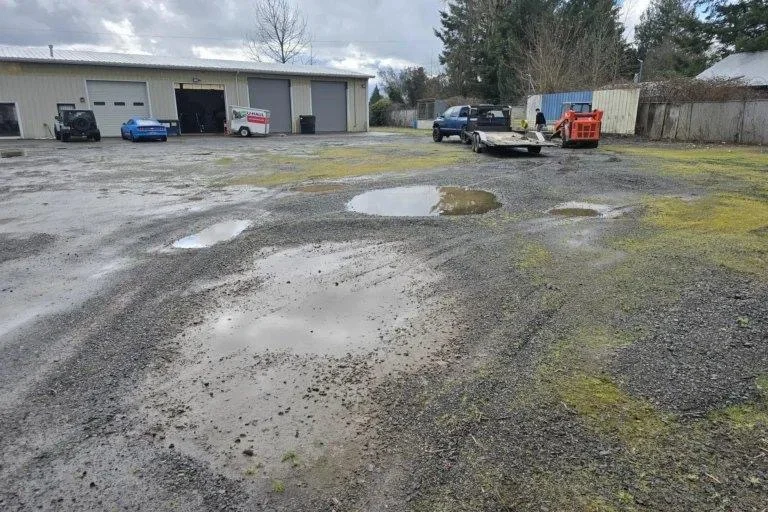
Standing water demonstrates why drainage problems must be diagnosed before excavation. Image source: Acre Maker website
Why drainage excavation Camas WA Requires a Property-Specific Plan
Camas properties can receive water from uphill ground, roofs, driveways and compacted landscaped areas. Because the terrain can change quickly, the nearest low point is not always a safe outlet. The evaluation should include the full path from source to discharge and the maintenance the homeowner is willing to perform.
The practical questions are consistent: What must remain protected? Where can equipment travel? Which elevations are fixed? Where will water go? What material is suitable for reuse? What inspections or approvals occur before work is covered? Answering those questions early helps a Camas, WA property move from an isolated excavation task to a coordinated, buildable result.
1. Diagnose the Water Source
The first useful step is to define the outcome before moving equipment. On a Camas, WA property, ponding may come from rainfall on the area, uphill runoff, roof discharge, a driveway barrier or saturated soil. During the site walk, the contractor should observe the site during rain and map every contributing surface and flow path. That information helps determine the equipment, access route, material handling, and order of operations needed for the work. For a drainage excavation Camas WA project, this early evaluation is especially important because the visible problem is often connected to drainage, soil condition, buried infrastructure, or a future phase of construction.
A sound recommendation is to separate surface, concentrated and subsurface water before selecting a solution. The scope should identify what will be removed or reshaped, what will remain protected, where excavated material will go, and what condition the area should be in at handoff. If the plan skips that level of detail, the chosen system may treat the puddle while the actual source continues. Clear benchmarks also make it easier to coordinate septic & drainage excavation with surveyors, builders, utility providers, septic professionals, or landscape crews without repeating work.
2. Confirm a Safe Outlet
A dependable plan separates what is visible on the surface from what controls performance below it. On a Camas, WA property, all drainage systems require a place for water to disperse, infiltrate or discharge lawfully. During the site walk, the contractor should measure elevations and inspect downhill property, ditches, storm facilities and sensitive areas. That information helps determine the equipment, access route, material handling, and order of operations needed for the work. For a drainage excavation Camas WA project, this early evaluation is especially important because the visible problem is often connected to drainage, soil condition, buried infrastructure, or a future phase of construction.
A sound recommendation is to design the complete route and outlet before digging the collection feature. The scope should identify what will be removed or reshaped, what will remain protected, where excavated material will go, and what condition the area should be in at handoff. If the plan skips that level of detail, water can be redirected toward structures, neighbors or erosion-prone slopes. Clear benchmarks also make it easier to coordinate septic & drainage excavation with surveyors, builders, utility providers, septic professionals, or landscape crews without repeating work.
3. Use Regrading for Broad Surface Problems
This decision should be made during field evaluation, not after excavation has already started. On a Camas, WA property, shallow water spread across a wide area often follows incorrect or settled surface elevations. During the site walk, the contractor should identify high points, low points and transitions around buildings, patios and drives. That information helps determine the equipment, access route, material handling, and order of operations needed for the work. For a drainage excavation Camas WA project, this early evaluation is especially important because the visible problem is often connected to drainage, soil condition, buried infrastructure, or a future phase of construction.
A sound recommendation is to reshape a continuous surface when adequate slope and space are available. The scope should identify what will be removed or reshaped, what will remain protected, where excavated material will go, and what condition the area should be in at handoff. If the plan skips that level of detail, isolated fill patches create new ridges and move ponding elsewhere. Clear benchmarks also make it easier to coordinate septic & drainage excavation with surveyors, builders, utility providers, septic professionals, or landscape crews without repeating work.
4. Use a Swale for Visible, Maintainable Flow
The goal is not simply to move soil or material; it is to create a site that supports the next phase. On a Camas, WA property, a swale can intercept or convey surface runoff while remaining accessible. During the site walk, the contractor should evaluate required width, depth, slope, lining and mowing or landscape needs. That information helps determine the equipment, access route, material handling, and order of operations needed for the work. For a drainage excavation Camas WA project, this early evaluation is especially important because the visible problem is often connected to drainage, soil condition, buried infrastructure, or a future phase of construction.
A sound recommendation is to choose a broad stable section that fits the property and outlet. The scope should identify what will be removed or reshaped, what will remain protected, where excavated material will go, and what condition the area should be in at handoff. If the plan skips that level of detail, a narrow steep ditch can erode, clog and become difficult to maintain. Clear benchmarks also make it easier to coordinate septic & drainage excavation with surveyors, builders, utility providers, septic professionals, or landscape crews without repeating work.

A long trench route showing the scale and access needs of underground drainage work. Image source: Acre Maker website
5. Use a Drainage Trench for Specific Conditions
Good site work is measured by how well the property functions after the equipment leaves. On a Camas, WA property, subsurface seepage or a constrained route may require aggregate, pipe or another engineered detail. During the site walk, the contractor should confirm soil, trench depth, pipe slope, filter materials, cleanouts and discharge. That information helps determine the equipment, access route, material handling, and order of operations needed for the work. For a drainage excavation Camas WA project, this early evaluation is especially important because the visible problem is often connected to drainage, soil condition, buried infrastructure, or a future phase of construction.
A sound recommendation is to use underground drainage only where it addresses the diagnosed water path. The scope should identify what will be removed or reshaped, what will remain protected, where excavated material will go, and what condition the area should be in at handoff. If the plan skips that level of detail, a trench without slope, outlet or maintainable access becomes a buried reservoir. Clear benchmarks also make it easier to coordinate septic & drainage excavation with surveyors, builders, utility providers, septic professionals, or landscape crews without repeating work.
6. Coordinate Roof and Driveway Runoff
A practical scope connects today’s work to the driveway, building, utility, drainage, or landscape work that follows. On a Camas, WA property, hard surfaces concentrate flow and can overwhelm a yard solution. During the site walk, the contractor should map downspouts, driveway crown, culverts, edges and paved drainage. That information helps determine the equipment, access route, material handling, and order of operations needed for the work. For a drainage excavation Camas WA project, this early evaluation is especially important because the visible problem is often connected to drainage, soil condition, buried infrastructure, or a future phase of construction.
A sound recommendation is to manage concentrated sources before asking the general landscape to absorb them. The scope should identify what will be removed or reshaped, what will remain protected, where excavated material will go, and what condition the area should be in at handoff. If the plan skips that level of detail, new grades or swales erode at the point where concentrated water enters. Clear benchmarks also make it easier to coordinate septic & drainage excavation with surveyors, builders, utility providers, septic professionals, or landscape crews without repeating work.
7. Protect Slopes and Structures
The best time to solve this issue is while access, elevations, and equipment sequencing are still flexible. On a Camas, WA property, drainage work can change soil moisture near foundations, retaining walls and hillsides. During the site walk, the contractor should review setbacks, utilities, slope stability and discharge energy. That information helps determine the equipment, access route, material handling, and order of operations needed for the work. For a drainage excavation Camas WA project, this early evaluation is especially important because the visible problem is often connected to drainage, soil condition, buried infrastructure, or a future phase of construction.
A sound recommendation is to keep excavation and outlets compatible with structural and geotechnical conditions. The scope should identify what will be removed or reshaped, what will remain protected, where excavated material will go, and what condition the area should be in at handoff. If the plan skips that level of detail, the drainage fix can undermine a slope, expose a foundation or saturate fill. Clear benchmarks also make it easier to coordinate septic & drainage excavation with surveyors, builders, utility providers, septic professionals, or landscape crews without repeating work.
8. Plan Maintenance and Observation
A written field plan gives the owner and contractor the same definition of a finished result. On a Camas, WA property, leaves, sediment, roots and settlement change drainage performance over time. During the site walk, the contractor should identify access points, cleanouts, vegetation management and inspection frequency. That information helps determine the equipment, access route, material handling, and order of operations needed for the work. For a drainage excavation Camas WA project, this early evaluation is especially important because the visible problem is often connected to drainage, soil condition, buried infrastructure, or a future phase of construction.
A sound recommendation is to design a system the owner can see, reach and maintain. The scope should identify what will be removed or reshaped, what will remain protected, where excavated material will go, and what condition the area should be in at handoff. If the plan skips that level of detail, a hidden or inaccessible system loses capacity until ponding returns. Clear benchmarks also make it easier to coordinate septic & drainage excavation with surveyors, builders, utility providers, septic professionals, or landscape crews without repeating work.
How Acre Maker Approaches Septic & Drainage Excavation Projects
Acre Maker performs excavation and grading in coordination with the approved septic or drainage design and the professionals responsible for permitting and installation. The field plan considers access, protected soil, elevations, excavation limits, spoil handling, inspections and final restoration.
For drainage work, the team evaluates the full path from water source to outlet. For septic work, the approved system layout controls. In both cases, careful excavation supports long-term performance and avoids unnecessary disturbance.
Learn more about Acre Maker’s start-to-finish groundwork services and the company’s commitment to local communication and dependable field work on the About Acre Maker page.
What a Complete Contractor Proposal Should Address
A useful proposal for drainage excavation Camas WA should define limits, quantities, exclusions and the condition of the finished site. Look for descriptions of mobilization, access, protection, clearing or excavation limits, soil and material handling, import or export, drainage, compaction, cleanup and restoration. The proposal should identify owner-provided information, permit responsibility, utility locating, inspections, schedule assumptions and conditions that could trigger a documented change. Comparing that scope is more reliable than comparing a single price with no shared definition of completion.
Ask how weather, unsuitable soil, buried debris, rock, groundwater, unmarked private utilities or design changes will be handled. A contractor cannot eliminate every unknown below the surface, but the agreement can establish communication, documentation and decision-making procedures before those unknowns affect the work.
A Practical drainage excavation Camas WA Planning Checklist
- Observe the property during meaningful rain.
- Map roof, driveway, uphill and subsurface sources.
- Measure elevations to possible outlets.
- Compare surface regrading, swales and trenches.
- Confirm utility and structural conflicts.
- Stabilize inlets, slopes and discharge points.
- Include cleanouts and maintenance access.
- Verify local stormwater and permit requirements.
Frequently Asked Questions
Is a French drain the best fix for every wet yard?
No. Broad surface ponding may respond better to regrading or a swale, while a trench is useful only when it has the right source, slope and outlet.
Can water be directed to the property line?
Drainage should not create adverse impacts to neighboring property. Confirm a lawful, stable outlet and applicable requirements.
How do I know whether water is surface or subsurface?
Observe timing and location during rain, look for seepage on slopes and compare ponding with roof and driveway discharge. Professional evaluation may be needed.
Will gravel alone improve drainage?
Gravel can provide storage or a stable surface, but it does not create an outlet and may clog when placed without appropriate design and separation.
Can Acre Maker combine drainage excavation and regrading?
Yes. Many successful solutions use both surface shaping and targeted excavation so collection, conveyance and discharge work together.
Plan Your Camas, WA Groundwork With Acre Maker
Successful drainage excavation Camas WA work creates more than a temporary visual improvement. It should make the property safer, easier to build on, better drained and ready for the next trade or long-term use. Acre Maker helps Southwest Washington property owners connect field conditions with a clear scope for septic & drainage excavation. To discuss the property, intended use and next steps, contact Acre Maker for a project estimate.
External Sources
- WSU Extension Clark County – Improving Drainage
- Clark County – Stormwater Code and Manual
- Washington State Department of Ecology – Construction Stormwater Permit
Image Credits
- drainage excavation Camas WA standing water evaluation – Acre Maker website
- Camas drainage trench excavation through wooded ground – Acre Maker website