
land clearing Washougal WA planning should begin with the finished property, not with the first machine task. Owners often call because trees, standing water, rough ground, a failed driveway or an underground route is blocking progress. The visible issue matters, but the lasting result depends on what comes next: a home, shop, utility, septic system, landscape, access road or drainage outlet. A site-specific plan connects today’s excavation work to that long-term use.
Acre Maker provides professional land clearing services for homeowners, builders and property owners across Southwest Washington. The team can evaluate the property, clarify the groundwork scope and coordinate related clearing, grading, access, trenching or excavation. Property owners can request a project estimate after gathering any plans, surveys, utility information and jurisdictional requirements available for the site.
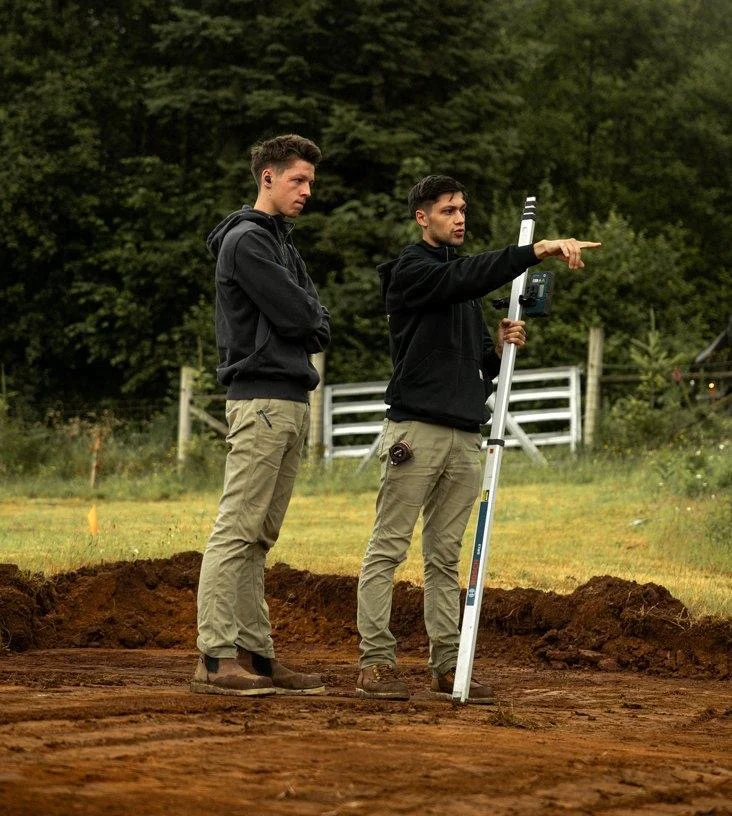
Acre Maker team evaluating elevations before selective clearing. Image source: Acre Maker website
Why land clearing Washougal WA Requires a Property-Specific Plan
Wooded Washougal properties can combine steep approaches, wet-season soils, mature trees and irregular building areas. That makes selective clearing a planning exercise rather than a simple removal job. The most useful site map shows the future home or outbuilding, driveway, utilities, septic area, drainage paths and vegetation to protect.
The practical questions are consistent: What must remain protected? Where can equipment travel? Which elevations are fixed? Where will water go? What material is suitable for reuse? What inspections or approvals occur before work is covered? Answering those questions early helps a Washougal, WA property move from an isolated excavation task to a coordinated, buildable result.
1. Start With a Purpose Map
The first useful step is to define the outcome before moving equipment. On a Washougal, WA property, the same tree may be an asset for privacy but an obstacle to a driveway, utility route or building envelope. During the site walk, the contractor should mark the intended footprint, access, staging area, septic reserve, drainage routes and trees that support the long-term plan. That information helps determine the equipment, access route, material handling, and order of operations needed for the work. For a land clearing Washougal WA project, this early evaluation is especially important because the visible problem is often connected to drainage, soil condition, buried infrastructure, or a future phase of construction.
A sound recommendation is to divide the property into protect, remove and evaluate zones before production clearing begins. The scope should identify what will be removed or reshaped, what will remain protected, where excavated material will go, and what condition the area should be in at handoff. If the plan skips that level of detail, valuable trees may be removed unnecessarily while future work still requires a second mobilization. Clear benchmarks also make it easier to coordinate land clearing with surveyors, builders, utility providers, septic professionals, or landscape crews without repeating work.
2. Identify Boundaries, Easements and Sensitive Areas
A dependable plan separates what is visible on the surface from what controls performance below it. On a Washougal, WA property, property lines, easements, wetlands, streams and habitat areas may not be obvious from standing in the woods. During the site walk, the contractor should compare field markings with reliable survey, title and jurisdictional information before selecting limits. That information helps determine the equipment, access route, material handling, and order of operations needed for the work. For a land clearing Washougal WA project, this early evaluation is especially important because the visible problem is often connected to drainage, soil condition, buried infrastructure, or a future phase of construction.
A sound recommendation is to keep clearing limits conservative until any permitting or critical-area questions are resolved. The scope should identify what will be removed or reshaped, what will remain protected, where excavated material will go, and what condition the area should be in at handoff. If the plan skips that level of detail, work can extend into an area that requires review or create conflicts with neighbors and future permits. Clear benchmarks also make it easier to coordinate land clearing with surveyors, builders, utility providers, septic professionals, or landscape crews without repeating work.
3. Choose Trees for Structure, Safety and Long-Term Use
This decision should be made during field evaluation, not after excavation has already started. On a Washougal, WA property, tree health, lean, root condition and distance from proposed improvements matter more than trunk size alone. During the site walk, the contractor should look at canopy competition, likely wind exposure after neighboring trees are removed, and conflicts with grading or foundations. That information helps determine the equipment, access route, material handling, and order of operations needed for the work. For a land clearing Washougal WA project, this early evaluation is especially important because the visible problem is often connected to drainage, soil condition, buried infrastructure, or a future phase of construction.
A sound recommendation is to retain well-positioned trees in groups where possible and remove trees that compromise access or the planned use. The scope should identify what will be removed or reshaped, what will remain protected, where excavated material will go, and what condition the area should be in at handoff. If the plan skips that level of detail, a newly exposed tree line can become unstable or require expensive follow-up removal. Clear benchmarks also make it easier to coordinate land clearing with surveyors, builders, utility providers, septic professionals, or landscape crews without repeating work.
4. Plan Equipment Access Before Cutting
The goal is not simply to move soil or material; it is to create a site that supports the next phase. On a Washougal, WA property, narrow gates, steep slopes, soft ground and overhead lines can control how logs, brush and stumps are handled. During the site walk, the contractor should walk the route from the public road to every work area and identify turning, loading and safe staging space. That information helps determine the equipment, access route, material handling, and order of operations needed for the work. For a land clearing Washougal WA project, this early evaluation is especially important because the visible problem is often connected to drainage, soil condition, buried infrastructure, or a future phase of construction.
A sound recommendation is to open a deliberate access corridor first and protect surfaces that must remain usable. The scope should identify what will be removed or reshaped, what will remain protected, where excavated material will go, and what condition the area should be in at handoff. If the plan skips that level of detail, machines may become boxed in, damage retained vegetation or create avoidable restoration work. Clear benchmarks also make it easier to coordinate land clearing with surveyors, builders, utility providers, septic professionals, or landscape crews without repeating work.

Behind-the-scenes vegetation and limb removal during a land-clearing project. Image source: Acre Maker website
5. Decide How Stumps and Roots Will Be Handled
Good site work is measured by how well the property functions after the equipment leaves. On a Washougal, WA property, leaving stumps beneath future drives, pads or landscaped areas can lead to settlement and maintenance problems. During the site walk, the contractor should match stump removal depth and root treatment to the final use of each zone. That information helps determine the equipment, access route, material handling, and order of operations needed for the work. For a land clearing Washougal WA project, this early evaluation is especially important because the visible problem is often connected to drainage, soil condition, buried infrastructure, or a future phase of construction.
A sound recommendation is to fully remove organic material from structural and travel areas while allowing less intensive treatment in natural zones. The scope should identify what will be removed or reshaped, what will remain protected, where excavated material will go, and what condition the area should be in at handoff. If the plan skips that level of detail, buried wood can decay and create voids beneath gravel, fill, slabs or finished grades. Clear benchmarks also make it easier to coordinate land clearing with surveyors, builders, utility providers, septic professionals, or landscape crews without repeating work.
6. Match Debris Handling to the Property
A practical scope connects today’s work to the driveway, building, utility, drainage, or landscape work that follows. On a Washougal, WA property, burning, hauling, chipping, mulching and on-site stockpiling each affect schedule, access and final appearance. During the site walk, the contractor should estimate volume and identify legal, safe and practical destinations for logs, brush, chips and unsuitable material. That information helps determine the equipment, access route, material handling, and order of operations needed for the work. For a land clearing Washougal WA project, this early evaluation is especially important because the visible problem is often connected to drainage, soil condition, buried infrastructure, or a future phase of construction.
A sound recommendation is to select disposal methods before clearing so production is not interrupted by full staging areas. The scope should identify what will be removed or reshaped, what will remain protected, where excavated material will go, and what condition the area should be in at handoff. If the plan skips that level of detail, debris can block access, create fire or erosion concerns and add unplanned hauling costs. Clear benchmarks also make it easier to coordinate land clearing with surveyors, builders, utility providers, septic professionals, or landscape crews without repeating work.
7. Protect Drainage While Soil Is Exposed
The best time to solve this issue is while access, elevations, and equipment sequencing are still flexible. On a Washougal, WA property, clearing changes interception, ground cover and the way rainfall reaches bare soil. During the site walk, the contractor should identify existing swales, low points and downhill receiving areas before removing vegetation. That information helps determine the equipment, access route, material handling, and order of operations needed for the work. For a land clearing Washougal WA project, this early evaluation is especially important because the visible problem is often connected to drainage, soil condition, buried infrastructure, or a future phase of construction.
A sound recommendation is to phase clearing, stabilize disturbed areas and keep sediment away from drainage paths. The scope should identify what will be removed or reshaped, what will remain protected, where excavated material will go, and what condition the area should be in at handoff. If the plan skips that level of detail, erosion and muddy runoff can damage the property and complicate the following grading phase. Clear benchmarks also make it easier to coordinate land clearing with surveyors, builders, utility providers, septic professionals, or landscape crews without repeating work.
8. Define the Finished Condition
A written field plan gives the owner and contractor the same definition of a finished result. On a Washougal, WA property, “cleared” can mean rough brush removal, a grubbed building area or a smooth surface ready for grading. During the site walk, the contractor should agree on remaining stumps, slash, topsoil, ruts, stockpiles and final cleanup expectations. That information helps determine the equipment, access route, material handling, and order of operations needed for the work. For a land clearing Washougal WA project, this early evaluation is especially important because the visible problem is often connected to drainage, soil condition, buried infrastructure, or a future phase of construction.
A sound recommendation is to write the handoff condition into the proposal and connect it to the next contractor’s needs. The scope should identify what will be removed or reshaped, what will remain protected, where excavated material will go, and what condition the area should be in at handoff. If the plan skips that level of detail, the owner may receive a site that looks open but is not ready for construction or maintenance. Clear benchmarks also make it easier to coordinate land clearing with surveyors, builders, utility providers, septic professionals, or landscape crews without repeating work.
How Acre Maker Approaches Land Clearing Projects
Acre Maker begins with a property walk that connects clearing limits to the owner’s actual next step. The team reviews access, retained vegetation, debris handling, stump treatment, drainage and the expected handoff condition. That approach helps prevent a clearing crew from solving only the visible vegetation problem while leaving roots, grades or access unresolved.
For projects that continue into grading or site preparation, keeping the groundwork under one coordinated scope can reduce remobilization and uncertainty. The owner should still confirm permits, surveys, critical-area requirements and any professional design needed for the property.
Learn more about Acre Maker’s start-to-finish groundwork services and the company’s commitment to local communication and dependable field work on the About Acre Maker page.
What a Complete Contractor Proposal Should Address
A useful proposal for land clearing Washougal WA should define limits, quantities, exclusions and the condition of the finished site. Look for descriptions of mobilization, access, protection, clearing or excavation limits, soil and material handling, import or export, drainage, compaction, cleanup and restoration. The proposal should identify owner-provided information, permit responsibility, utility locating, inspections, schedule assumptions and conditions that could trigger a documented change. Comparing that scope is more reliable than comparing a single price with no shared definition of completion.
Ask how weather, unsuitable soil, buried debris, rock, groundwater, unmarked private utilities or design changes will be handled. A contractor cannot eliminate every unknown below the surface, but the agreement can establish communication, documentation and decision-making procedures before those unknowns affect the work.
A Practical land clearing Washougal WA Planning Checklist
- Sketch the future building, driveway and utility plan.
- Confirm property lines, easements and possible critical areas.
- Tag trees to retain, remove and evaluate.
- Choose equipment access and material staging locations.
- Specify stump and root treatment by final land use.
- Select debris hauling, chipping or stockpiling methods.
- Plan erosion control and temporary stabilization.
- Define the exact finished condition in writing.
Frequently Asked Questions
Is selective clearing more expensive than clearing everything?
It can require more planning and careful equipment movement, but it may reduce unnecessary removal, replanting, erosion work and future loss of privacy.
Can Acre Maker clear brush without removing mature trees?
Yes, the scope can focus on brush, small growth and access improvement while retaining marked trees, subject to safe equipment access and site conditions.
Do I need a permit to remove trees in Washougal?
Requirements depend on jurisdiction, critical areas, forest-practice rules and project purpose. Confirm current requirements before work begins.
Should stumps always be removed?
Not always. Stumps in natural areas may remain, while stumps beneath future buildings, driveways or finished grades generally require more complete removal.
When should grading be planned?
Before clearing. Knowing future elevations and drainage routes helps determine which vegetation, roots and soil should be removed or protected.
Plan Your Washougal, WA Groundwork With Acre Maker
Successful land clearing Washougal WA work creates more than a temporary visual improvement. It should make the property safer, easier to build on, better drained and ready for the next trade or long-term use. Acre Maker helps Southwest Washington property owners connect field conditions with a clear scope for land clearing. To discuss the property, intended use and next steps, contact Acre Maker for a project estimate.
External Sources
- Clark County – Forest Practices Permits
- Clark County – Tree Removal Near Existing Structures
- USDA NRCS – Web Soil Survey
Image Credits
- land clearing Washougal WA site evaluation with survey equipment – Acre Maker website
- selective land clearing crew working on a wooded Washougal property – Acre Maker website