
land clearing Ridgefield WA planning should begin with the finished property, not with the first machine task. Owners often call because trees, standing water, rough ground, a failed driveway or an underground route is blocking progress. The visible issue matters, but the lasting result depends on what comes next: a home, shop, utility, septic system, landscape, access road or drainage outlet. A site-specific plan connects today’s excavation work to that long-term use.
Acre Maker provides professional land clearing services for homeowners, builders and property owners across Southwest Washington. The team can evaluate the property, clarify the groundwork scope and coordinate related clearing, grading, access, trenching or excavation. Property owners can request a project estimate after gathering any plans, surveys, utility information and jurisdictional requirements available for the site.
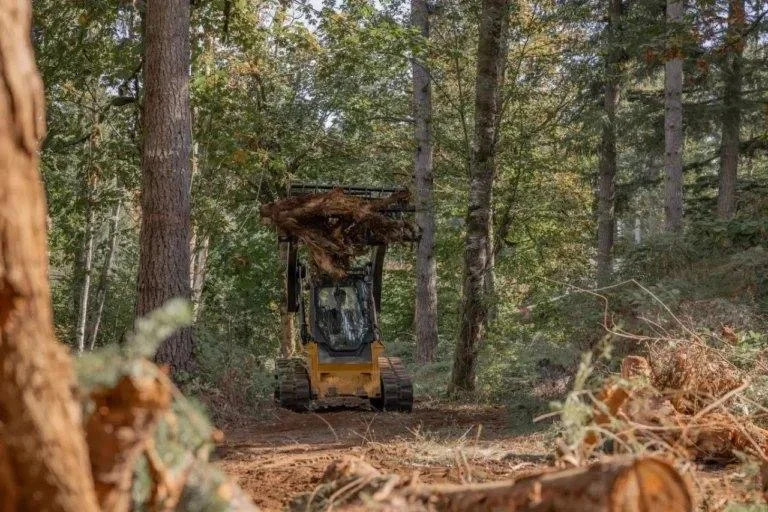
Tracked equipment removing roots and woody material during acreage clearing. Image source: Acre Maker website
Why land clearing Ridgefield WA Requires a Property-Specific Plan
Ridgefield acreage projects often evolve over time: first access, then a home site, utilities, septic, shops, pastures or additional drives. Clearing all acreage at once can expose more soil than necessary and lock the owner into assumptions that later change. Phasing focuses money and disturbance on areas with a defined next step.
The practical questions are consistent: What must remain protected? Where can equipment travel? Which elevations are fixed? Where will water go? What material is suitable for reuse? What inspections or approvals occur before work is covered? Answering those questions early helps a Ridgefield, WA property move from an isolated excavation task to a coordinated, buildable result.
1. Begin With the Full Property Concept
The first useful step is to define the outcome before moving equipment. On a Ridgefield, WA property, a first-phase driveway can conflict with a future shop, septic field or utility corridor if the long-term layout is not considered. During the site walk, the contractor should place all known improvements and likely future uses on one concept plan. That information helps determine the equipment, access route, material handling, and order of operations needed for the work. For a land clearing Ridgefield WA project, this early evaluation is especially important because the visible problem is often connected to drainage, soil condition, buried infrastructure, or a future phase of construction.
A sound recommendation is to use the concept to distinguish permanent infrastructure from temporary access and staging. The scope should identify what will be removed or reshaped, what will remain protected, where excavated material will go, and what condition the area should be in at handoff. If the plan skips that level of detail, early work may occupy the best location for a later improvement and require demolition or relocation. Clear benchmarks also make it easier to coordinate land clearing with surveyors, builders, utility providers, septic professionals, or landscape crews without repeating work.
2. Prioritize Permanent Access
A dependable plan separates what is visible on the surface from what controls performance below it. On a Ridgefield, WA property, the first usable road becomes the route for surveyors, drillers, concrete trucks, material deliveries and emergency access. During the site walk, the contractor should evaluate grade, width, turning, drainage and connection to future building areas. That information helps determine the equipment, access route, material handling, and order of operations needed for the work. For a land clearing Ridgefield WA project, this early evaluation is especially important because the visible problem is often connected to drainage, soil condition, buried infrastructure, or a future phase of construction.
A sound recommendation is to clear and prepare the most durable alignment that serves multiple phases. The scope should identify what will be removed or reshaped, what will remain protected, where excavated material will go, and what condition the area should be in at handoff. If the plan skips that level of detail, temporary tracks can become deeply rutted and consume money without becoming part of the final property. Clear benchmarks also make it easier to coordinate land clearing with surveyors, builders, utility providers, septic professionals, or landscape crews without repeating work.
3. Protect Septic and Reserve Areas
This decision should be made during field evaluation, not after excavation has already started. On a Ridgefield, WA property, heavy equipment, stockpiles and tree removal decisions can affect proposed septic and reserve locations. During the site walk, the contractor should coordinate preliminary septic information before choosing haul roads and debris piles. That information helps determine the equipment, access route, material handling, and order of operations needed for the work. For a land clearing Ridgefield WA project, this early evaluation is especially important because the visible problem is often connected to drainage, soil condition, buried infrastructure, or a future phase of construction.
A sound recommendation is to mark protected areas and keep unnecessary traffic out of them. The scope should identify what will be removed or reshaped, what will remain protected, where excavated material will go, and what condition the area should be in at handoff. If the plan skips that level of detail, soil can be compacted or a reserve area can be blocked by permanent improvements. Clear benchmarks also make it easier to coordinate land clearing with surveyors, builders, utility providers, septic professionals, or landscape crews without repeating work.
4. Clear Only Confirmed Building and Work Zones
The goal is not simply to move soil or material; it is to create a site that supports the next phase. On a Ridgefield, WA property, a broad open area may seem efficient but can increase erosion, weeds and maintenance while plans remain fluid. During the site walk, the contractor should use surveyed or clearly dimensioned limits for the first building pad, staging and utility work. That information helps determine the equipment, access route, material handling, and order of operations needed for the work. For a land clearing Ridgefield WA project, this early evaluation is especially important because the visible problem is often connected to drainage, soil condition, buried infrastructure, or a future phase of construction.
A sound recommendation is to leave buffer vegetation around unconfirmed zones until the design is ready. The scope should identify what will be removed or reshaped, what will remain protected, where excavated material will go, and what condition the area should be in at handoff. If the plan skips that level of detail, the owner pays to clear, stabilize and maintain ground that may not be used for years. Clear benchmarks also make it easier to coordinate land clearing with surveyors, builders, utility providers, septic professionals, or landscape crews without repeating work.

Acre Maker equipment moving a large log while preserving surrounding trees. Image source: Acre Maker website
5. Coordinate Utilities Before Final Cleanup
Good site work is measured by how well the property functions after the equipment leaves. On a Ridgefield, WA property, power, water, communication and drainage lines often cross areas that were just graded or landscaped. During the site walk, the contractor should identify shared corridors and likely connection points during clearing. That information helps determine the equipment, access route, material handling, and order of operations needed for the work. For a land clearing Ridgefield WA project, this early evaluation is especially important because the visible problem is often connected to drainage, soil condition, buried infrastructure, or a future phase of construction.
A sound recommendation is to reserve straight, accessible utility routes and delay final surfacing until underground work is complete. The scope should identify what will be removed or reshaped, what will remain protected, where excavated material will go, and what condition the area should be in at handoff. If the plan skips that level of detail, finished areas may be reopened and re-compacted, creating visible patches and added cost. Clear benchmarks also make it easier to coordinate land clearing with surveyors, builders, utility providers, septic professionals, or landscape crews without repeating work.
6. Sequence Stumps, Rough Grade and Drainage
A practical scope connects today’s work to the driveway, building, utility, drainage, or landscape work that follows. On a Ridgefield, WA property, tree removal alone does not create a stable pad or road and stump excavation changes soil volume. During the site walk, the contractor should match grubbing depth, cut and fill, drainage features and stabilization to each phase. That information helps determine the equipment, access route, material handling, and order of operations needed for the work. For a land clearing Ridgefield WA project, this early evaluation is especially important because the visible problem is often connected to drainage, soil condition, buried infrastructure, or a future phase of construction.
A sound recommendation is to complete a coherent package in each active zone rather than leaving isolated unfinished tasks. The scope should identify what will be removed or reshaped, what will remain protected, where excavated material will go, and what condition the area should be in at handoff. If the plan skips that level of detail, partially prepared areas hold water, settle irregularly and require another contractor to rediscover the site conditions. Clear benchmarks also make it easier to coordinate land clearing with surveyors, builders, utility providers, septic professionals, or landscape crews without repeating work.
7. Manage Material as a Project Resource
The best time to solve this issue is while access, elevations, and equipment sequencing are still flexible. On a Ridgefield, WA property, logs, chips, topsoil, rock and excavated soil may have value in later phases if they are separated and stored correctly. During the site walk, the contractor should estimate quantities and choose stockpile locations outside construction and drainage areas. That information helps determine the equipment, access route, material handling, and order of operations needed for the work. For a land clearing Ridgefield WA project, this early evaluation is especially important because the visible problem is often connected to drainage, soil condition, buried infrastructure, or a future phase of construction.
A sound recommendation is to label and shape stockpiles so useful material remains accessible. The scope should identify what will be removed or reshaped, what will remain protected, where excavated material will go, and what condition the area should be in at handoff. If the plan skips that level of detail, mixed piles become unsuitable, block future work or require off-site disposal. Clear benchmarks also make it easier to coordinate land clearing with surveyors, builders, utility providers, septic professionals, or landscape crews without repeating work.
8. Establish a Handoff Plan for Every Phase
A written field plan gives the owner and contractor the same definition of a finished result. On a Ridgefield, WA property, each mobilization should end with safe access, stabilized soil and clear next steps. During the site walk, the contractor should document completed limits, remaining vegetation, elevations and temporary controls. That information helps determine the equipment, access route, material handling, and order of operations needed for the work. For a land clearing Ridgefield WA project, this early evaluation is especially important because the visible problem is often connected to drainage, soil condition, buried infrastructure, or a future phase of construction.
A sound recommendation is to photograph and map the phase so future teams know what was done. The scope should identify what will be removed or reshaped, what will remain protected, where excavated material will go, and what condition the area should be in at handoff. If the plan skips that level of detail, later crews may repeat clearing, disturb protected areas or price uncertainty into their proposals. Clear benchmarks also make it easier to coordinate land clearing with surveyors, builders, utility providers, septic professionals, or landscape crews without repeating work.
How Acre Maker Approaches Land Clearing Projects
Acre Maker begins with a property walk that connects clearing limits to the owner’s actual next step. The team reviews access, retained vegetation, debris handling, stump treatment, drainage and the expected handoff condition. That approach helps prevent a clearing crew from solving only the visible vegetation problem while leaving roots, grades or access unresolved.
For projects that continue into grading or site preparation, keeping the groundwork under one coordinated scope can reduce remobilization and uncertainty. The owner should still confirm permits, surveys, critical-area requirements and any professional design needed for the property.
Learn more about Acre Maker’s start-to-finish groundwork services and the company’s commitment to local communication and dependable field work on the About Acre Maker page.
What a Complete Contractor Proposal Should Address
A useful proposal for land clearing Ridgefield WA should define limits, quantities, exclusions and the condition of the finished site. Look for descriptions of mobilization, access, protection, clearing or excavation limits, soil and material handling, import or export, drainage, compaction, cleanup and restoration. The proposal should identify owner-provided information, permit responsibility, utility locating, inspections, schedule assumptions and conditions that could trigger a documented change. Comparing that scope is more reliable than comparing a single price with no shared definition of completion.
Ask how weather, unsuitable soil, buried debris, rock, groundwater, unmarked private utilities or design changes will be handled. A contractor cannot eliminate every unknown below the surface, but the agreement can establish communication, documentation and decision-making procedures before those unknowns affect the work.
A Practical land clearing Ridgefield WA Planning Checklist
- Create a full-property concept before Phase 1.
- Prioritize permanent access and the first build zone.
- Protect septic, reserve and critical areas.
- Mark exact clearing limits for every phase.
- Reserve shared utility corridors.
- Plan stump removal, rough grading and drainage together.
- Separate useful logs, rock, soil and chips.
- Document each completed phase for future contractors.
Frequently Asked Questions
How large should the first clearing phase be?
It should be large enough for permanent access, the confirmed construction area, staging and required infrastructure, but no larger than the next project stage can use and stabilize.
Can phased clearing lower total cost?
It can reduce unnecessary disturbance and rework, although repeated mobilizations must be balanced against the benefit of delaying uncertain areas.
Should utility corridors be cleared in the first phase?
Usually when routes are reasonably confirmed. Shared corridors can reduce repeated excavation and make later installations easier.
What should remain protected during acreage clearing?
Unconfirmed building areas, septic reserve areas, drainage paths, critical areas, valuable tree groups and soil stockpiles should be clearly marked.
Can Acre Maker combine clearing and grading?
Yes. Combining related groundwork can create a cleaner handoff and reduce gaps between vegetation removal, rough grading, access and stabilization.
Plan Your Ridgefield, WA Groundwork With Acre Maker
Successful land clearing Ridgefield WA work creates more than a temporary visual improvement. It should make the property safer, easier to build on, better drained and ready for the next trade or long-term use. Acre Maker helps Southwest Washington property owners connect field conditions with a clear scope for land clearing. To discuss the property, intended use and next steps, contact Acre Maker for a project estimate.
External Sources
- Clark County – Forest Practices Permits
- Clark County – Tree Removal Near Existing Structures
- USDA NRCS – Web Soil Survey
Image Credits
- land clearing Ridgefield WA equipment removing woody debris – Acre Maker website
- phased acreage land clearing in Ridgefield WA – Acre Maker website